




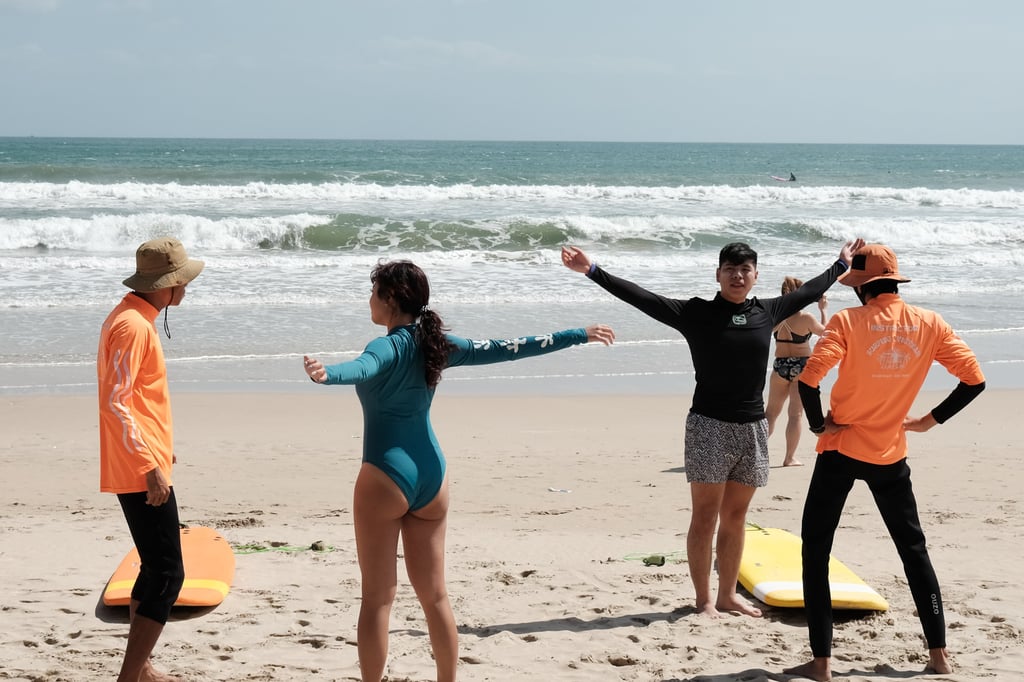

Is Surfing Hard to Learn? The Ultimate Truth for Beginners in 2026
1. Is Surfing Hard to Learn? An Honest Answer
There is a very common fear among those who watch experienced surfers glide effortlessly across the ocean: "Surfing looks so hard; you must be incredibly strong or naturally gifted to do it." This self-limiting belief stops many people from ever touching a surfboard and experiencing the ultimate feeling of freedom on the water.
So, is surfing hard to learn? How long does it actually take for a complete beginner to catch a wave and stand up on a surfboard? Let’s uncover the truth about this sport from an expert perspective and look at a realistic training timeline.
stay up to date
Newsletter
Surfing Blog > Beginner Guide
📅 Published: April 2026 | ⏱️ Reading Time: 7 minutes
If you were to rate it on a scale of 1 to 10, reputable international surfing magazines like SurferToday state that the difficulty of learning basic surfing techniques is only between a 2 and 7. This means: Surfing is not too difficult to start, but it requires consistency to master.
The reality is that surfing will feel incredibly tough if you try to teach yourself the wrong way, choose the wrong surf spot, or practice without guidance. On the other hand, it becomes easy, fun, and safe when you are placed in the right environment: guided by a professional instructor at a beach with the right wave conditions.
Surfing is not about trying to "fight or defeat the wave." Instead, the core of surfing is learning how to feel the ocean, keep your balance, and harmonize with the rhythm of the sea.
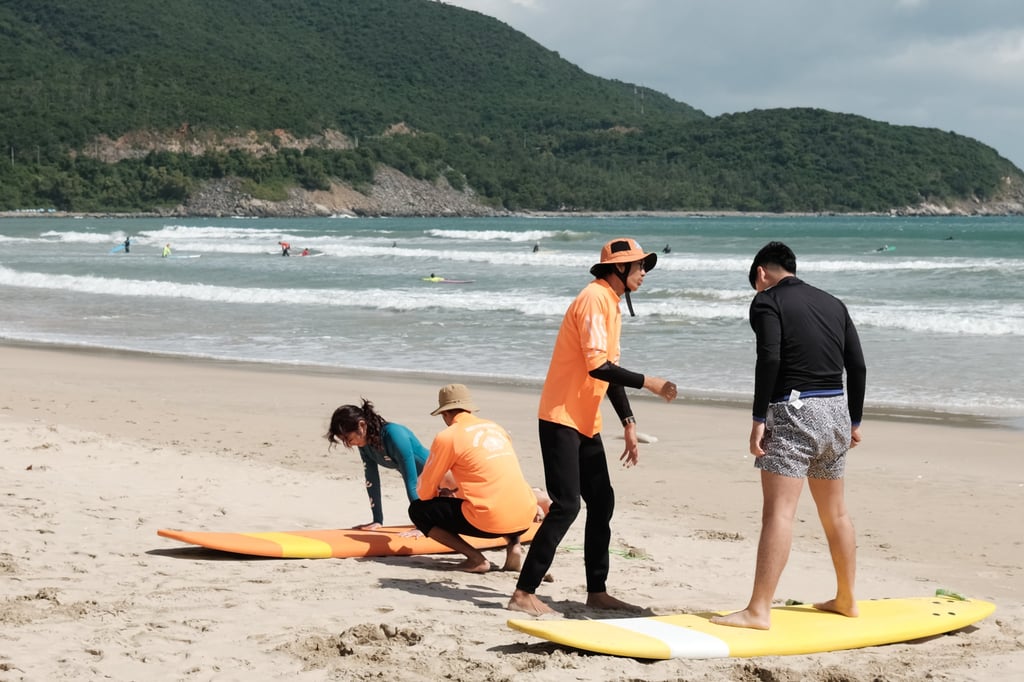

Image: Cam Ranh Surf Camp
2. How Long Does It Take a Beginner to Stand Up on a Surfboard?
While everyone progresses at their own pace based on focus and fitness, joining a structured surf lesson accelerates the timeline faster than you might think:
Within the first 45 – 60 minutes: Under the 1-on-1 guidance of a surf coach, the vast majority of beginners can successfully perform a "Pop-up" (standing up straight on the board) and ride a wave for a few seconds.
After 2 to 3 lessons: You will build muscle memory, learn how to position your body correctly on the board, master efficient paddling techniques, and start catching basic whitewater waves on your own without needing a push from your instructor.


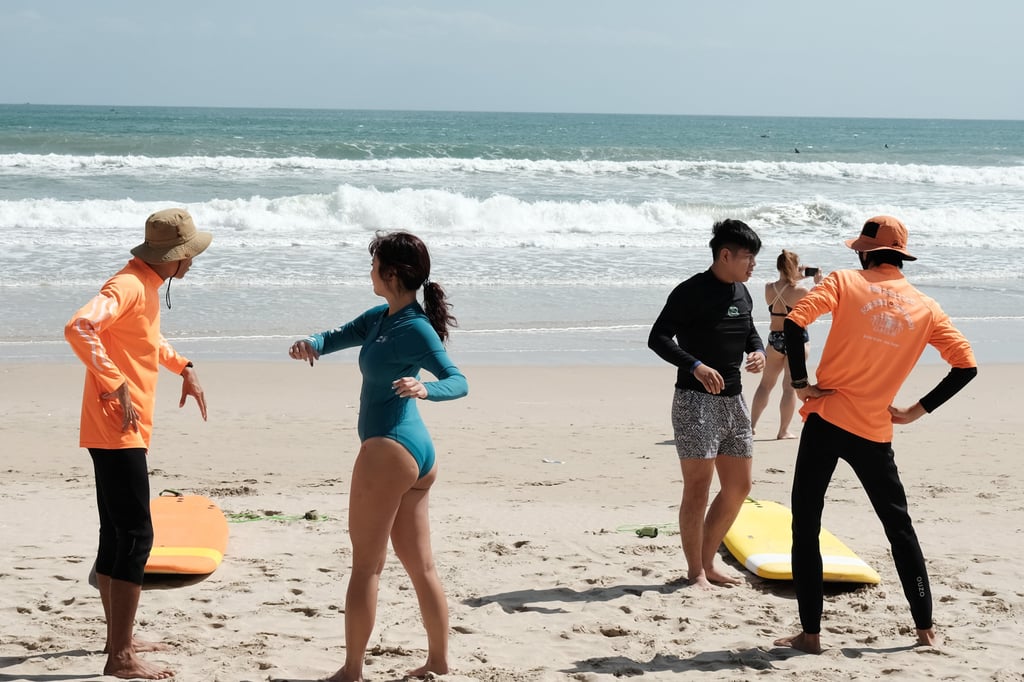
Image: Cam Ranh Surf Camp
6. Explore Surf Lessons at Cam Ranh Surf Camp (2026 Season)
If you are looking for the perfect place to turn your dream of surfing into reality, Cam Ranh Surf Camp at Bai Dai Beach offers tailored programs for every skill level:
TRY SURF Package (1 Session x 2.5h): A trial experience to get familiar with the board, learn the pop-up technique, and enjoy the thrill of riding your very first wave.
BASIC SURF Package (3 Sessions x 2.5h): A foundational course where you master wave-reading, efficient paddling, and proper surfing posture (Level 1).
ADVANCED SURF Package (5 Sessions x 2.5h): Advanced techniques to help you control your speed and learn how to trim and turn the board on the green wave face (Level 2).

Hotline: +84 77 357 1235
Zalo/WhatsApp: +84 94 300 1997
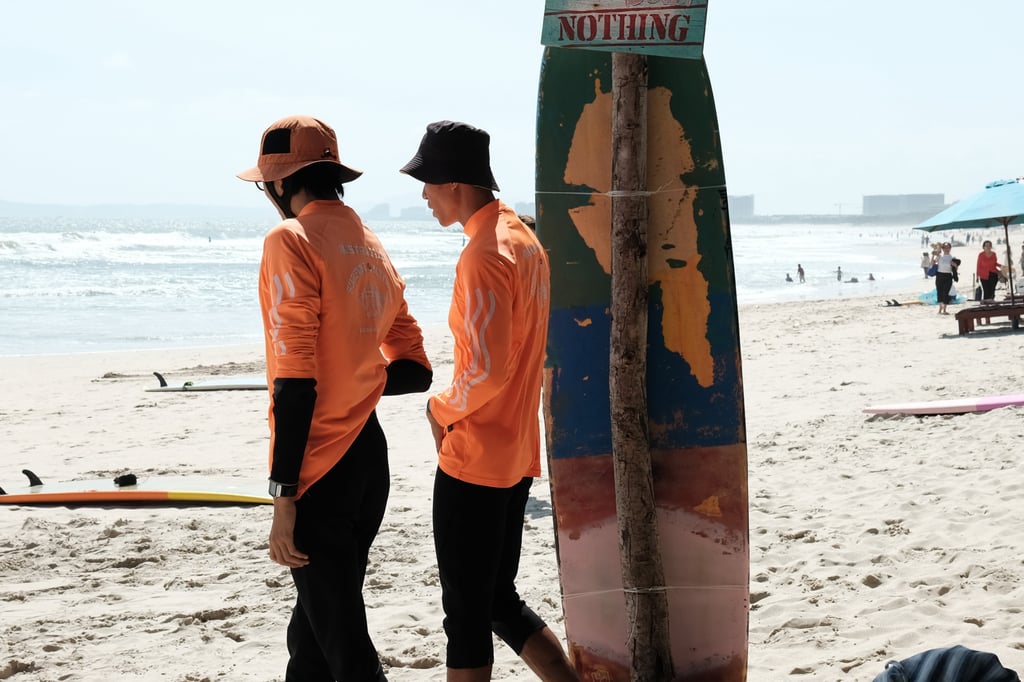

Image: Cam Ranh Surf Camp
3. Inside a Standard 2.5-Hour Surf Lesson: What to Expect
To help you visualize how a surf lesson works and why beginners can stand up so quickly, here is the breakdown of a standard 2.5-hour (150-minute) session at Cam Ranh Surf Camp:
First 15-20 Mins
Dry Land Training & Safety: Dynamic stretching, learning pop-up techniques, paddling posture, and vital ocean safety rules on the sand.
Next 60-70 Mins
In-Water Practice (Session 1): Heading into the ocean with your instructor to catch your first whitewater waves and practicing the pop-up.
10-15 Mins
Rest & Feedback: Heading back to shore for water, sunscreen reapplication, and personalized posture corrections from your coach.
Final 45-50 Mins
In-Water Practice (Session 2): Returning to the water to refine your balance, ride longer waves, and build confidence.
4. Key Factors to Speed Up Your Surfing Progress
Mastering a surfboard doesn't require you to be overly muscular or young. Your learning speed depends heavily on three core elements:
4.1. Choosing the Right Surfboard
Beginners should absolutely avoid shortboards used by professionals, as they are highly unstable. The "golden choice" for your first day is always a Longboard made of soft foam. These foamies offer excellent buoyancy and stability, making it much easier to balance and stand up.
4.2. Surf Spot Characteristics
An ideal beach for beginners features a gentle, sloping sandy bottom with no dangerous hidden reefs, and most importantly, consistent, soft, rolling waves. Bai Dai Beach (Cam Ranh, Khanh Hoa) is currently rated as one of the safest beaches with the best whitewater waves for beginners in Vietnam.
4.3. Basic Swimming Skills
Do you need to know how to swim to surf? Having swimming skills is a major advantage that boosts your confidence when you wipe out. However, if you cannot swim well yet, you can still join surf lessons in shallow waters (chest-deep) under the strict 1-on-1 supervision of a professional coach.
5. Key Factors to Speed Up Your Surfing Progress
To ensure your wipeouts result in laughter rather than injuries, you must memorize these safety rules:
Always Wear a Safety Leash: The leash connects your ankle to the surfboard. This ensures your board won't float away and acts as a life-saving floatation device if you fall into deep water.
Paddle Perpendicular to the Waves: When paddling or walking your board out to sea, always point the nose of the board straight into the oncoming waves. Never let the board sit sideways, as a wave hitting the side can slam the board into your body.
How to Wipe Out Safely: When you lose balance, try to fall to the side or flat on your back—never jump forward over the nose of the board. As you hit the water, cover your head with both arms and stay under for a few seconds until the wave passes before surfacing.
Image: Cam Ranh Surf Camp

Is Surfing Hard to Learn? The Ultimate Truth for Beginners in 2026
Is surfing hard to learn for absolute beginners? Discover the honest truth about the learning curve, physical requirements, and tips to stand up on your board fast.
Tran Nguyen
6/1/20265 min read